Pacific Graphics 2026
Flexible Motion Generation from
Language and Style References
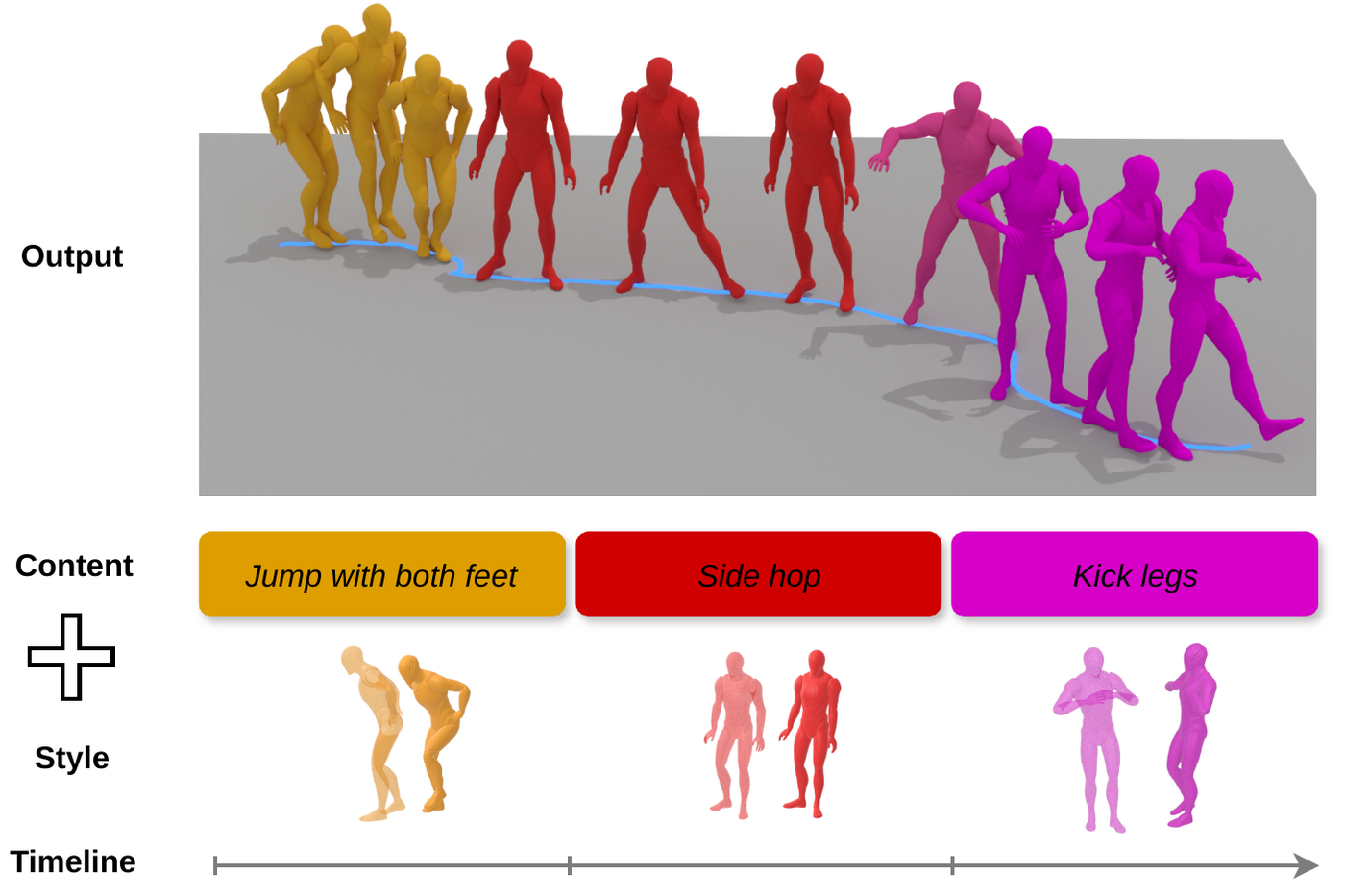
FlexMoGen generates long, high-quality human motion that follows a time-varying text prompt while reflecting the style of one or more reference clips — learned without any style labels.
Abstract
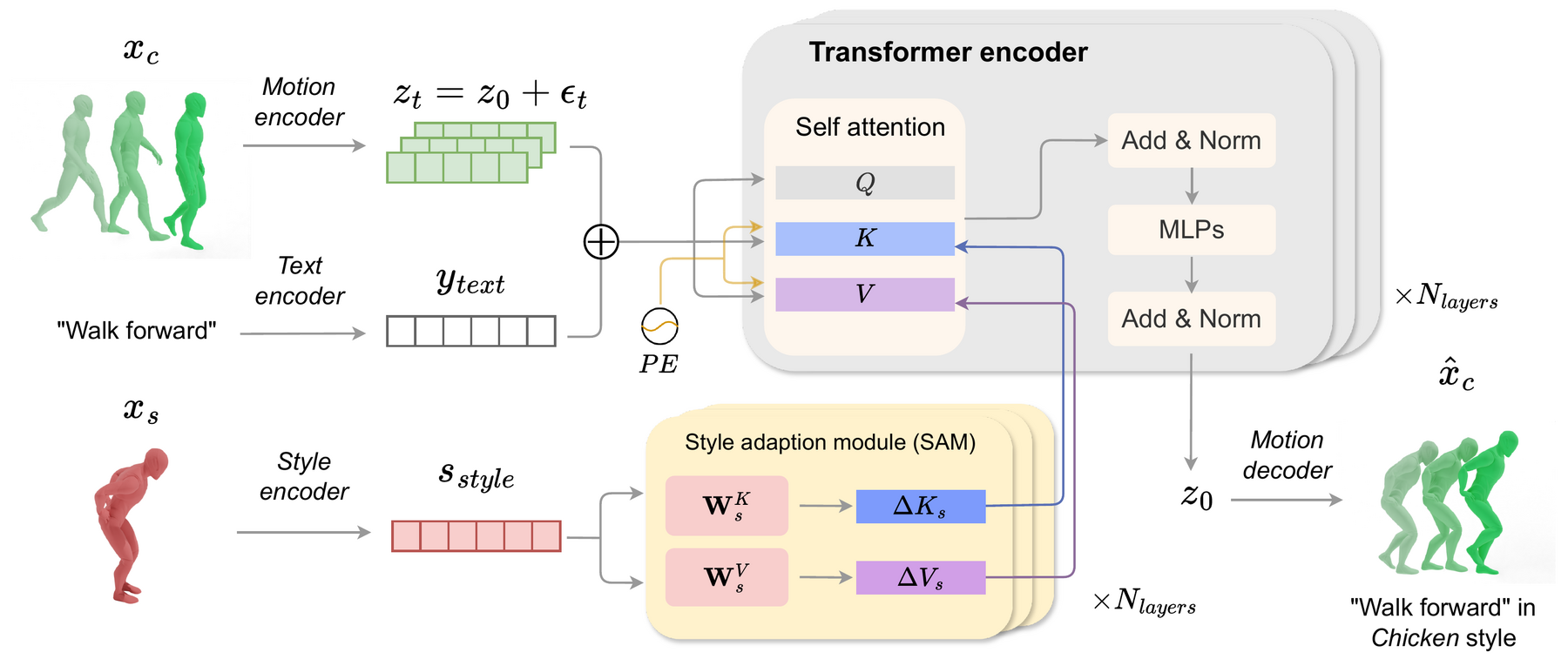
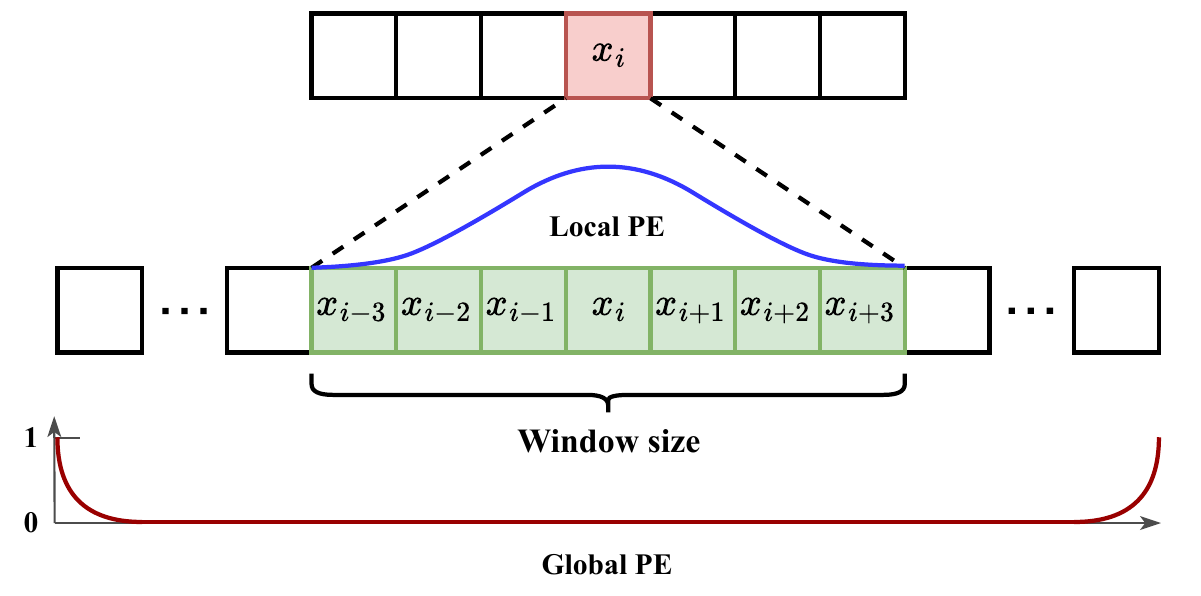
We introduce FlexMoGen, a novel framework for flexible human motion synthesis conditioned on both natural language descriptions and motion style references. Text prompts are effective at defining semantic content, but they are often limited in capturing fine-grained style details such as timing, limb articulation, and expressive dynamics. A style example clip supplements the text by conveying these nuanced motion characteristics directly, enabling the model to preserve high-level intent while reproducing the desired stylistic traits. Given a text prompt and a style example clip, FlexMoGen generates high-quality motions that preserve semantic content while faithfully reflecting the target style, offering users greater control over the animation generation process. Unlike prior methods that rely on discrete style labels and do not generalize to long or multi-style generation, FlexMoGen learns a variational style encoder without style supervision and supports long, time-varying, multi-style synthesis. Our framework jointly pre-trains the style encoder and a text-to-motion latent diffusion model within a unified architecture, modulating motion style through a lightweight adaptation module. It integrates an efficient relative positional encoding scheme and is trained on both stylized and non-stylized datasets, enabling strong generalization to unseen text–style combinations. Experiments show that FlexMoGen achieves the best balance between content fidelity and style reflection.
Video
Narrated overview with all results animated.
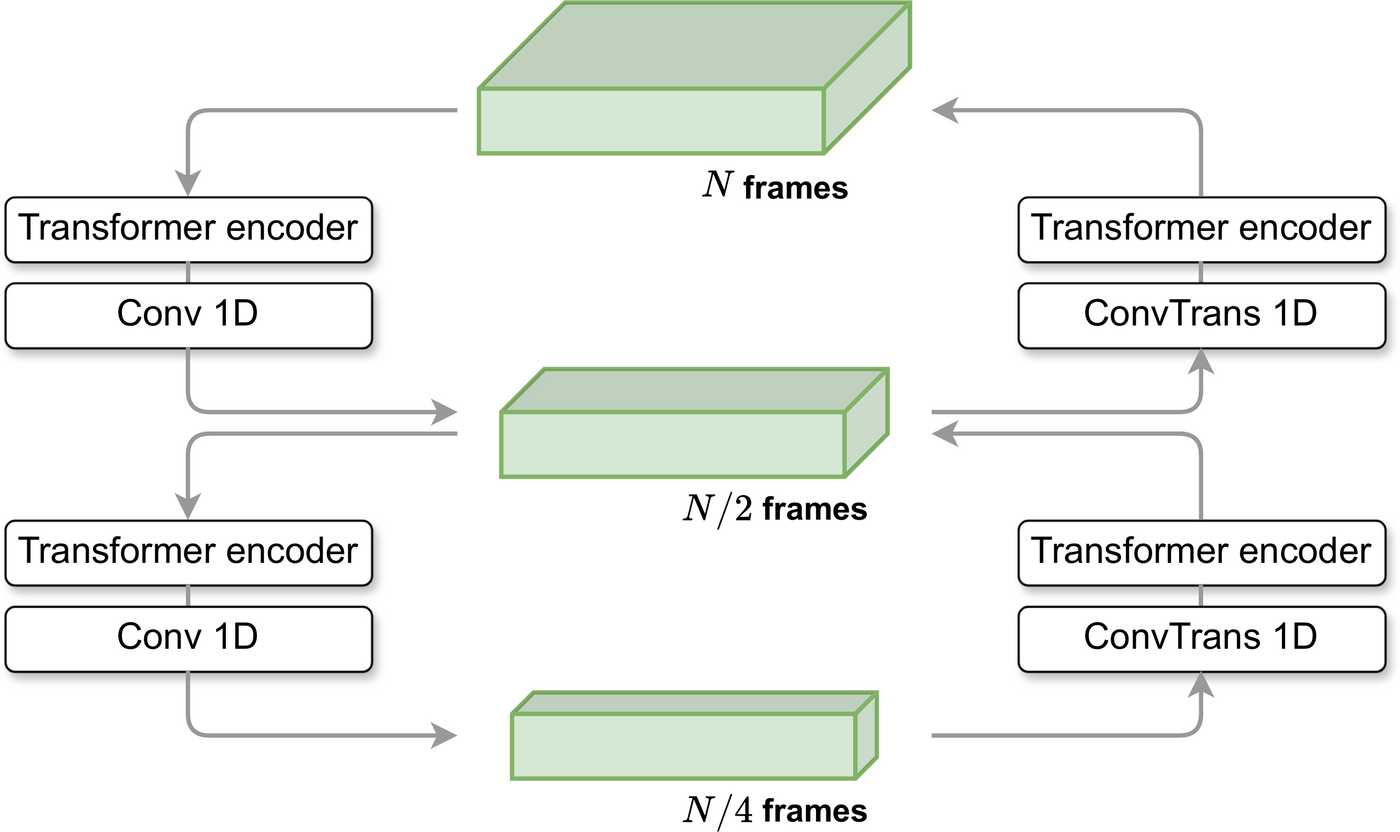
How It Works
Results — Single Style
Comparisons against T2M + MotionPuzzle, SMooDi, and LoRA-MDM. Every style reference is held out from training. Click any clip to enlarge.
“Side hop to left” — Zombie style
Arms raised forward with a stiff body. Only our model hops to the left in a straight line with arms raised in front.
Style referenceZombie
LoRA-MDM
T2M + MotionPuzzle
SMooDi
FlexMoGenOurs
“Side hop to left” — Chicken style
Crouched, bent-knee posture with arms tucked in.
Style referenceChicken
LoRA-MDM
T2M + MotionPuzzle
SMooDi
FlexMoGenOurs
“Backpedaling” — Dinosaur style
Bent arms raised in front of the chest, bent torso and knees. Only our model backpedals in the correct direction without erratic movements.
Style referenceDinosaur
LoRA-MDM
T2M + MotionPuzzle
SMooDi
FlexMoGenOurs
“Spinning clockwise” — ArmsAboveHead style
Only our model spins clockwise with raised arms without erratic artifacts such as unintended translation.
Style referenceArmsAboveHead
LoRA-MDM
T2M + MotionPuzzle
SMooDi
FlexMoGenOurs
“Standing long jump” — Chicken style
Only our model produces a clean jump without visible artifacts such as ground penetration or unnecessary extra steps.
Style referenceChicken
LoRA-MDM
T2M + MotionPuzzle
SMooDi
FlexMoGenOurs
Results — Time-Varying Style
A single generated sequence in which the requested style changes partway through. Baselines tend to keep producing the first style after the switch was requested.
“Walking forward then stopping and turning left”
Styles transition Dinosaur → Chicken → Aeroplane. Only our model captures the intended style transitions while performing every action.
Style referencesDinosaur → Chicken → Aeroplane
T2M + MotionPuzzle
SMooDi
FlexMoGenOurs
“Jump with both feet, then side hop, then kick legs”
Simultaneous action and style transitions over 360 frames, with styles Chicken → Penguin → BeatChest applied in sequence. BeatChest is out-of-distribution: it is unseen during training.
Style referencesChicken → Penguin → BeatChest
FlexMoGenOurs
Results — Body-Part Style Mixing
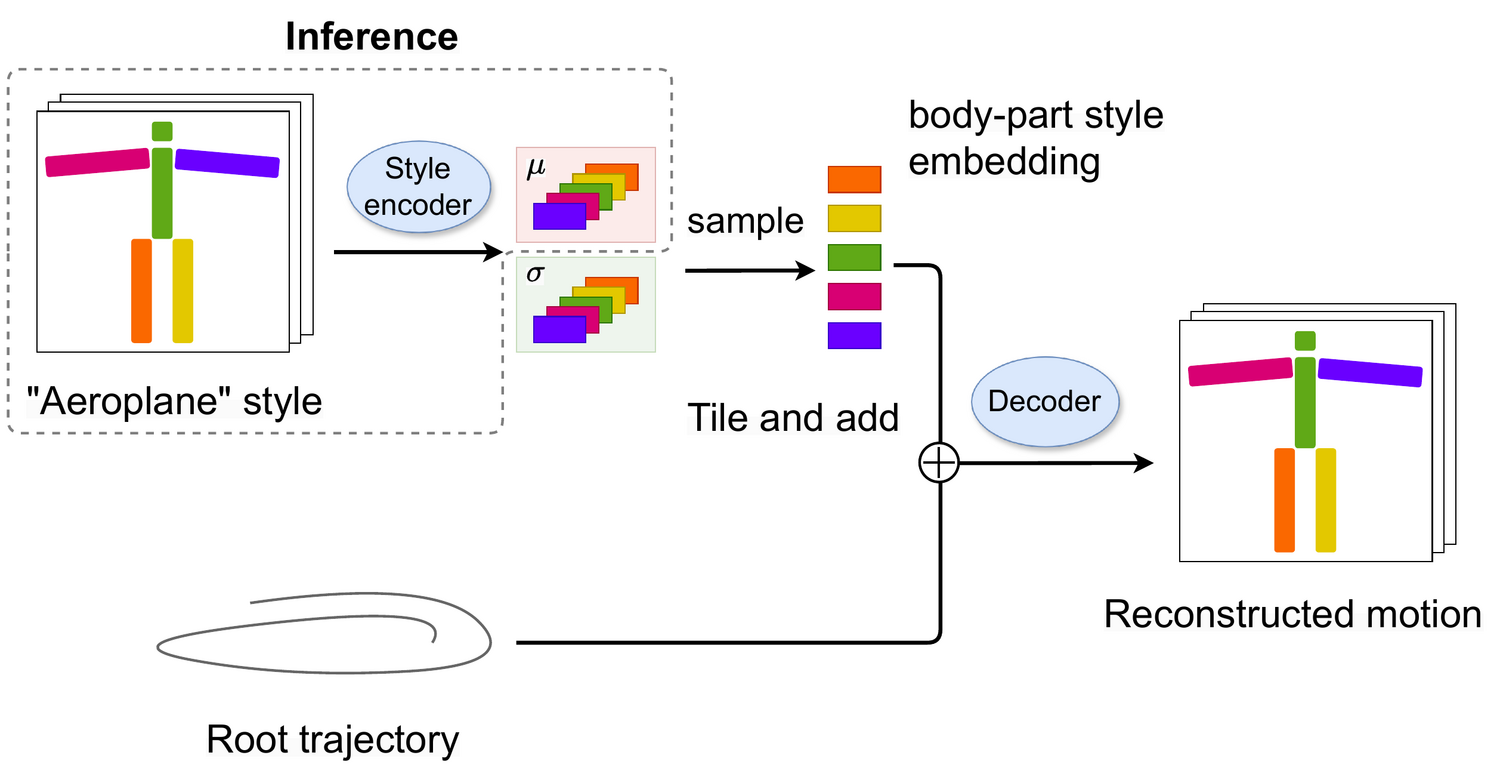
Because the style encoder embeds the five body parts independently, per-part components can be taken from different reference clips and assembled into a single style code before injection. No single reference provides the resulting combination.
Three style references
Text prompt: “Walking forward then turning left”. The legs come from Chicken, both arms from Aeroplane, and the spine from Zombie.
LegsChicken
Both armsAeroplane
SpineZombie
FlexMoGenAll three at once
Four style references, asymmetric arms
Text prompt: “Walking forward then turning left”. The two arms are drawn from two different clips, so the generated motion is asymmetric between them.
Left armRaisedLeftArm
Right armArmsBehindBack
SpineZombie
LegsLegsApart
FlexMoGenAll four at once
Results — Style References Outside 100STYLE
Text prompt: “walking clockwise in a circle”. This reference comes from an internal capture of upper-body and prop-handling motions, entirely outside the style encoder’s pretraining distribution. Transfer in this setting is hit or miss rather than uniformly degraded, and the failures are graceful, in that the content prompt keeps being followed and what is lost is the stylistic character of the reference. The full set of references spanning that range is examined in the supplementary material.
Holding a soda can — transfers successfully
The left arm carried bent against the chest appears in our output, while the circular path asked for by the prompt is preserved.
Style referenceHolding a soda can
FlexMoGenOurs
BibTeX
If you find this work useful, please consider citing:
@article{lan2026flexmogen,
  title   = {Flexible Motion Generation from Language and Style References},
  author  = {Lan, Kai Weixian and Criswell, Bodie and Fedkiw, Briana and
             Zhang, Zhan and Teran, Joseph and Holden, Daniel},
  year    = {2026},
  note    = {Pacific Graphics 2026},
  eprint  = {2609.08032},
  archivePrefix = {arXiv},
  url     = {https://arxiv.org/abs/2609.08032}
}
Acknowledgements
The contributions of Kai Weixian Lan, Bodie Criswell, and Briana Fedkiw to this work were made during internships at Epic Games.